Everyday Memories
Small ways to save everyday pet memories
A familiar habit, a short video or one sentence beside a photograph can be enough. Start a small collection of everyday pet memories without turning it into a chore.
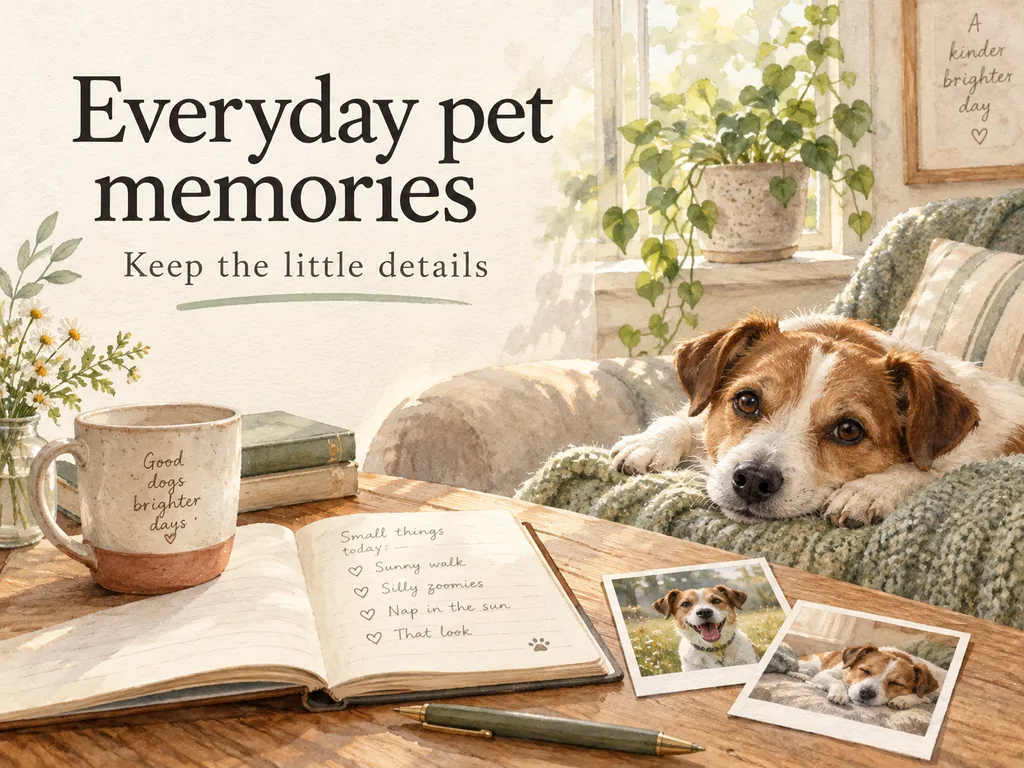
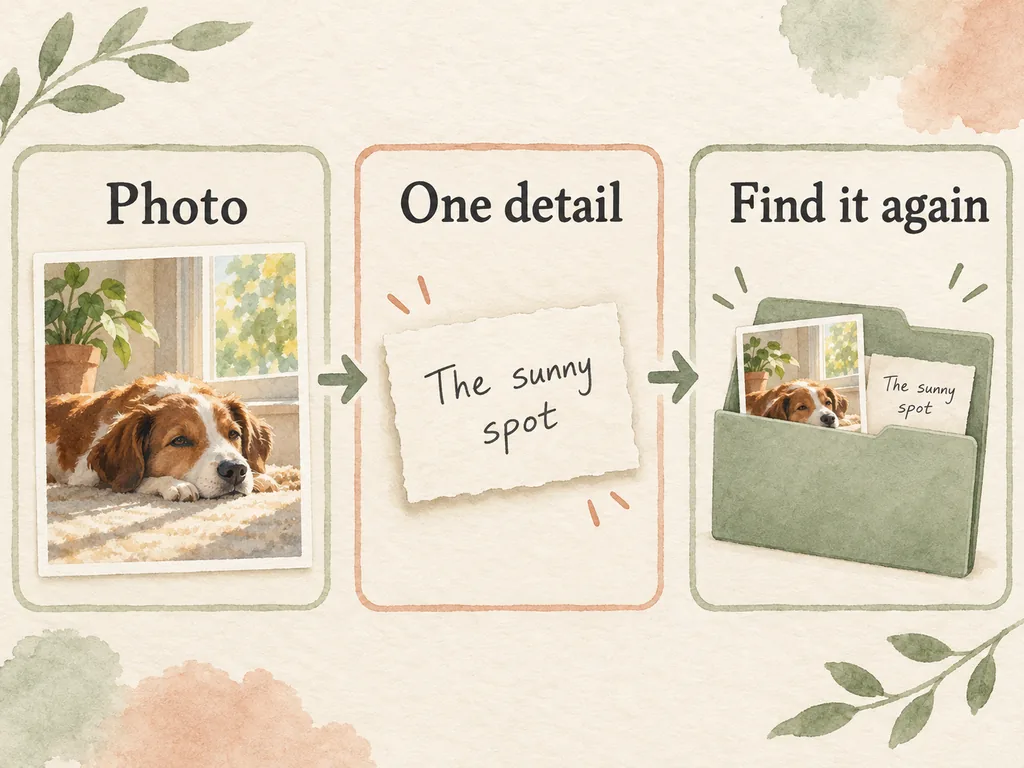
Open a photograph of your pet and add one thing the picture doesn't tell you. Why that spot by the door? What happened just before the shutter? Save the note with the image. That's a useful start to keeping everyday pet memories, with no new app or scrapbook to buy.
An ordinary afternoon belongs in the collection too. So does the blanket dragged across the floor, or the expression that means someone has noticed dinner. You don't have to wait for an anniversary to write it down.
Keep the details a photograph does not explain
A picture shows your cat on a chair. The caption can explain that she takes it every time you stand up. That's the part you might tell someone looking over your shoulder.
Write it the way you'd say it. For example, “He brought this toy to the door before every walk” gives the toy a place in the story. If you also want to write “My beautiful boy,” leave that in. A caption can be affectionate and specific.
If you share the pet's care with someone else, invite a memory from them. They may notice a different routine. Keep their wording rather than turning every contribution into the same polished voice, and ask before sharing their note beyond the people it was meant for.
Try one prompt, not a whole questionnaire
Pick whichever question brings a detail to mind:
- Where does your pet settle when everyone is home?
- What happens just before a familiar walk or meal?
- Which small habit makes you recognize them immediately?
- What happened just outside the edge of this photograph?
Leave the other questions unanswered. If the journal sits untouched for a month, start the next entry with something you remember now.
Some memories need a few seconds of video
Some details fit better in a short clip: the way a dog carries a toy, a cat's greeting, or the pause before a familiar stretch. If you already have a video that includes them, keep that version before making a shorter edit or adding music.
You do not need to provoke a reaction to record it. Let your pet carry on with the activity they chose. If filming interrupts it, put the phone away. A written note can hold the memory without another take.
The Library of Congress guidance on keeping digital video recommends retaining high-quality versions with descriptive information. A version posted online may contain less information than the original. For a clip you care about, keep the original file and add a short note saying who is in it and what is happening.
Later, when six clips show almost the same doorway, “Waiting by the back door with the blue toy” gives you something to look for.
Give a few memories a home you can find
Give a few favorites a place of their own. That might be a named computer folder, a phone album, or a notebook that tells you where the files are. Use something you can find again. The rest of the camera roll can stay as it is for now.
Include your pet's name and enough context to distinguish the memory. If several pets appear, identify each one. Use a date when you know it; if you do not, a description such as “the summer after we moved” is more honest than inventing a day.
A collection and a backup serve different purposes. The collection helps you find things. An independent copy helps if the original is lost. The Library of Congress photo-archiving guide advises keeping selected photographs in more than one place and checking that saved files remain readable. Its suggested check is at least once a year.
Do not assume a phone album or a shared link creates a separate copy. Check the service or device's own instructions, and try opening an important saved file from the second location. Keep an original separately when you crop, annotate or prepare a picture for printing.
Choose a small project you would actually finish
A whole book may sound appealing until you have to choose the first hundred photographs. Try a smaller version first. One page gives you somewhere to put the memory you already have in mind.
| If you want to keep… | Try this small starting point |
|---|---|
| One ordinary afternoon | A photograph with a few lines underneath |
| A handful of familiar habits | A short album with one habit per page |
| Movement or a particular sound | A clearly named video file with a separate note |
| A photograph and a small object | A simple collection with a card explaining the object |
For a physical collection, our pet keepsake box guide offers ways to bring a few objects and notes together. You can photograph a toy that is still in use instead of taking it away for a display.
If you want to print one image, the photo selection guide can help you compare expression, detail and framing. A photograph can be worth keeping even when it is not suitable for a large print. Its personal value and its suitability for a particular format are separate questions.
Mark a milestone without recreating it
A birthday, homecoming or adoption anniversary can give you a reason to gather a few memories. You can also choose an ordinary day with no special label.
Missing the first-day photo? Begin with a later one. Write what you remember and leave uncertain details open. There's no need to make your pet repeat a pose to fill a gap in the album.
You could put last year's picture next to a note about the same routine now. If all you have is today's photograph, use that. A gap in the record doesn't need disguising.
Keep private memories private
Saving something does not mean posting it. Before sharing a photograph or ordering a printed item, check that you have permission to use it. Look for other people, addresses, phone numbers on tags, or documents in the background that do not belong in the version you share.
Make a separate copy for sharing if you need to remove those details. Keep the original in your private collection. Ask before including someone else's written memory, particularly if it was sent to you privately.
One picture is enough to begin
Scroll until one picture makes you pause. Write the thing you remember about it before you move on. Then save the note with the picture and check that the file has another copy.
If that memory later becomes a present, our guide to choosing a personalized gift for a pet person starts with the recipient's habits and preferences. But the record is already useful as a photo and a sentence. You can leave it there.