Remembrance Ideas
Creating a Pet Keepsake Box
Create a pet keepsake box with photos, tags and short notes. Follow a simple arrangement example for everyday milestones or memories after a goodbye.
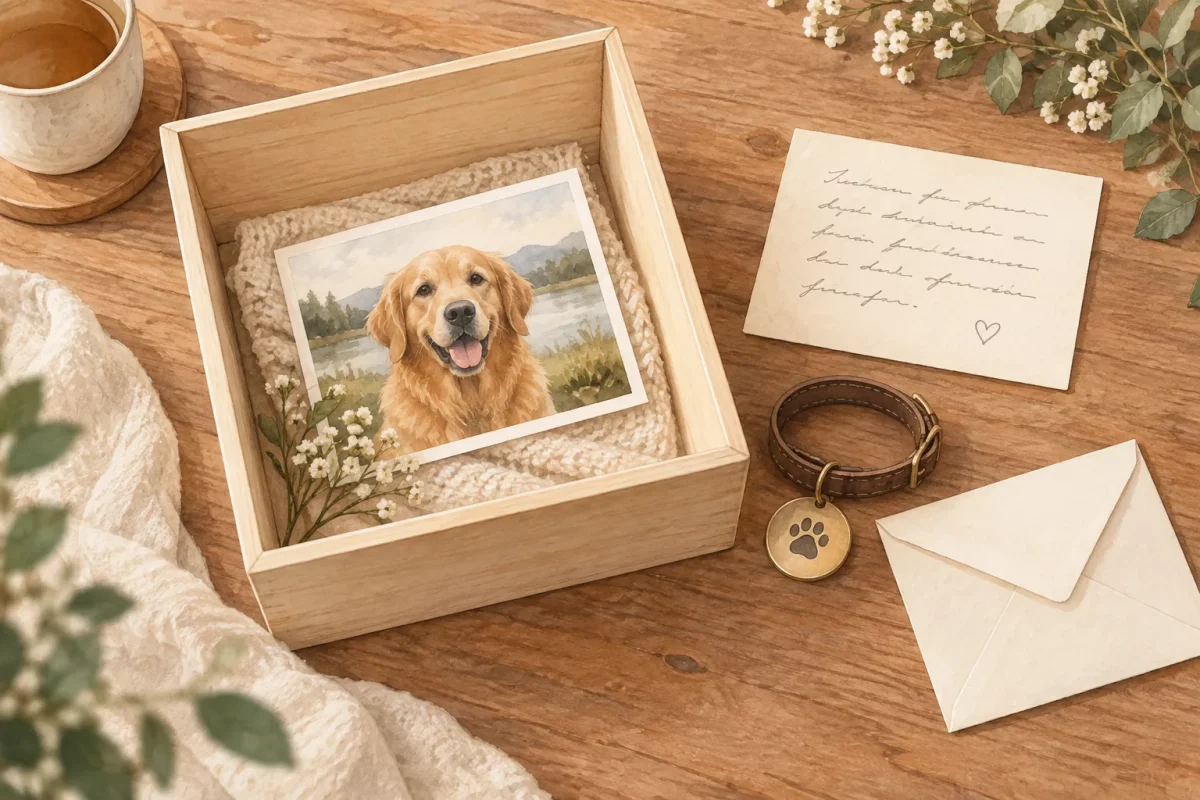
Start a pet keepsake box with a few things you already have: a photograph, a written memory or a name tag you have chosen to keep. Select the objects first, then find a container that holds them comfortably.
A box can collect everyday memories, mark an adoption anniversary or hold reminders after a pet's death. It does not have to contain everything.
Decide what this box will hold
Choose what you want to bring together: your pet's first year at home, perhaps, or a few objects you have kept after a goodbye. You can leave the rest for another day.
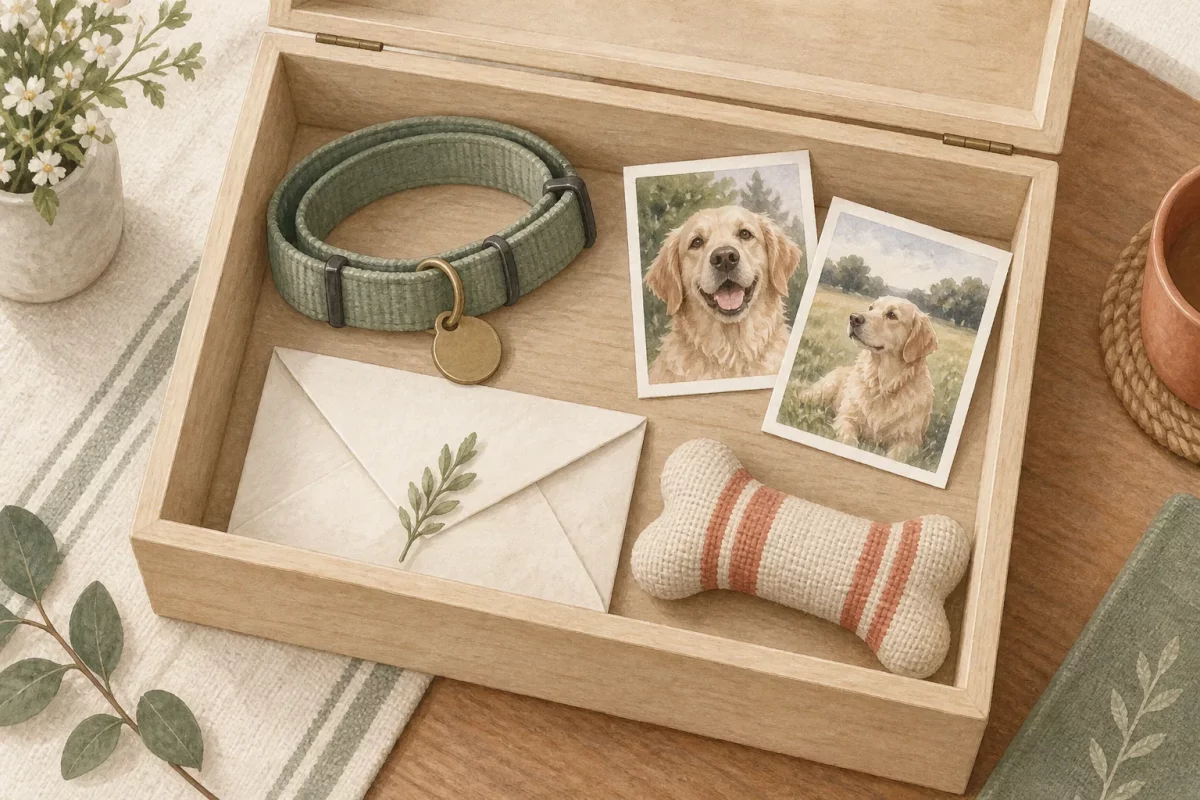
Editorial keepsake illustration, not a customer collection or a storage-product specification.
An ordinary keepsake box is not automatically an urn. This article concerns photographs, notes and personal objects; a container intended for ashes needs its own documented capacity and closure.
For other ways to record a pet's story, see Pet Memorial Ideas.
Choose a box after choosing the objects
Lay the chosen contents on a table. Try them in a clean, dry box you already like before buying anything. Check that the lid closes without pressing on a photograph or forcing a toy into place.
Think about how you will use it. A box you open occasionally can stay on a shelf. A collection of larger objects may need a different container, or you can keep pictures of those objects instead.
A box's appearance does not establish archival protection. If a photograph or object has special storage requirements, follow the relevant care guidance rather than assuming an attractive container will preserve it indefinitely.
Gather a few things with a story
Useful pet keepsake box ideas often start with ordinary objects:
- A copy of a favorite photograph.
- An old tag no longer needed for everyday use.
- A separate card explaining a familiar habit.
- A letter, drawing or note someone has offered for the collection.
- A photograph of a toy that is too large to include.
If your pet still uses an object, leave it in use. Photographing a favorite toy can preserve the memory without taking the toy away to complete a display.
Keep food and damp items out of the collection. Small tags and other loose objects should stay away from pets or children who might swallow them. For selecting a picture for printing, read the photo selection guide.
Add a note you will understand later
Write one sentence beside an item on a separate card. A name and a bit of context are often more useful than a polished tribute.
Here are a few invented captions to show the kind of detail you could use:
"Her favorite place was the chair beside the kitchen window."
"The tag from our first year together."
"The afternoon we explored the new garden."
Replace the details with your own. If the date is uncertain, describe the occasion instead: "The summer we moved" is more honest than inventing a day and month.
You can also invite another person to add a note if they want to. Keep their wording, and ask before sharing it publicly. For a collection centered on living companionship, try saving everyday pet memories.
Try a simple arrangement
Here is a hypothetical starting arrangement: one printed photograph, an old tag, a note and an envelope holding a copy of a letter.
Editorial arrangement example. The note, tag and envelope sit beside the box, ready to be tried inside; this is not preservation guidance for irreplaceable originals.
Place the photograph where it can be lifted without bending. Keep the note separate so you can change it later. Put the loose tag where it will not scrape across the photograph.
Try the arrangement and close the lid gently. If it feels crowded, leave something out or choose a larger container. Avoid cutting original prints or permanently fixing objects just to make the arrangement fit.
Keep it somewhere that suits the contents
Keep the box clean and dry, in a location that suits the objects inside. Follow any care instructions supplied with them. Attractive packaging alone does not establish archival protection or a guaranteed preservation period.
The box can stay private. If you want to show it to someone, check permission for other people's photographs and messages first.
If all you want to keep together is a photograph and an old tag, stop there. You can add the letter another time, or leave the box as it is.
For original card wording and other creative projects, return to Pet Loss & Remembrance Resources. These ideas are not counseling or clinical grief guidance.