Remembrance Ideas
What to get someone whose dog died
A practical guide to choosing a dog-loss gift, asking before personalizing it, and offering care without expecting a response.
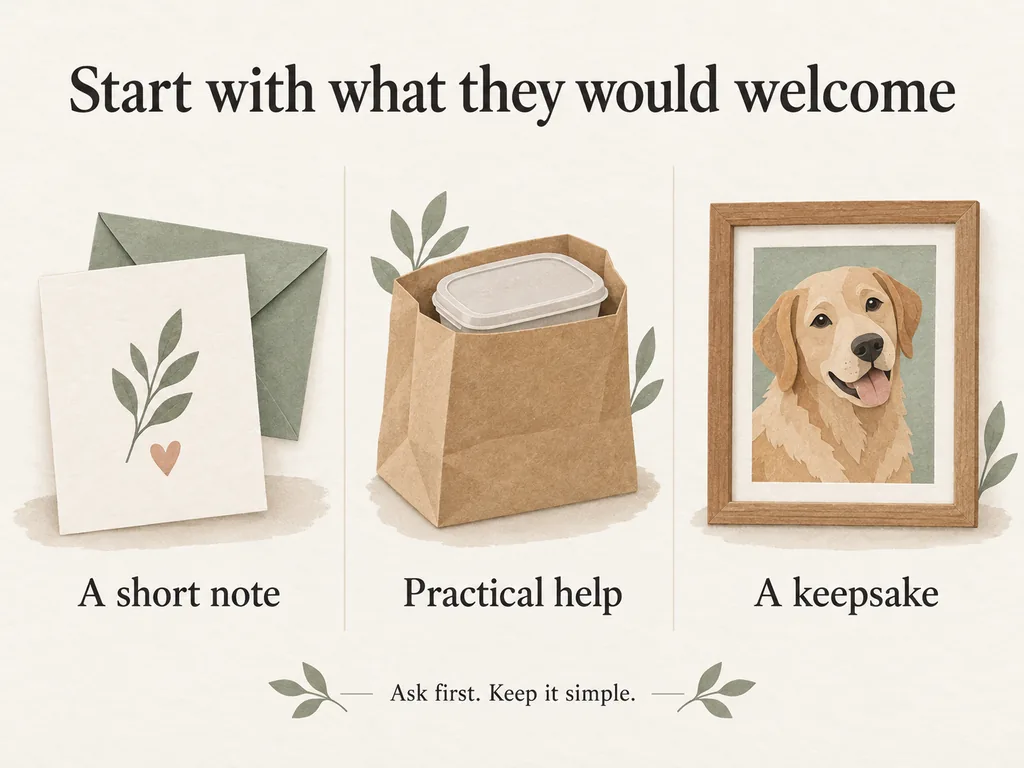
A short handwritten card, an offer of practical help, or a photo keepsake they have said they would welcome are reasonable places to start. Choose something that fits the person and your relationship. If you are unsure about a memorial gift, ask before ordering it. You can send a kind note without buying anything.
You may find yourself scrolling past dozens of portraits and engraved stones, worried about choosing the wrong one. Before ordering, find out whether your friend would welcome a keepsake at all.
Start with what they would welcome
Think about the person before the product. Do they keep framed photographs around the house? Have they mentioned wanting a portrait? Would they prefer a quiet message to a delivery that starts a conversation at the door?
If you do not know, a small question is enough: "Would you like a photo keepsake of [dog's name], or would you rather I just send a note?" Accept either answer. No answer is not permission to go ahead with something personal.
Your relationship matters, too. A coworker may appreciate a private card. A close friend might welcome a specific offer to bring dinner or help with an errand. Being close to someone still does not give you permission to arrange their dog's belongings or commission a memorial in their name without asking.
Match the gift to what you know
Use these as options, not a list of things to send together.
| Your situation | A possible choice | Check first |
|---|---|---|
| You know them only a little | A brief card or private message | The dog's name, if you plan to use it |
| You are close and know their routine | A meal, groceries, or one specific errand | Whether they want the help and when it would suit them |
| They want a keepsake and have chosen a photo | A print, frame, or commissioned portrait | Photo permission, style, wording, and product requirements |
| They prefer not to receive an object | A donation to an organization they choose | Whether a donation and any acknowledgment are welcome |
A card can be the whole gift
Write the dog's name if you know it. If you shared a walk or remember being greeted at the door, you could mention that real moment. If you never met the dog, say you are sorry. You do not need to borrow a memory or add a parcel to make the note count.
Offer practical help that is easy to accept or decline
"I can bring dinner on Wednesday if you'd like" is more concrete than "Let me know if you need anything." Use a day and an offer you can actually manage. Ask about dietary needs before sending food, and arrange delivery rather than leaving something perishable at an empty house.
For a friend far away, a familiar restaurant's delivery may be more useful than a box of unfamiliar treats. Ask first, and check that it reaches their address. Choose a one-time order so there is nothing for them to cancel later.
Choose a photo keepsake with their input
A small framed print or portrait can suit someone who wants a visible reminder. Let them choose a favorite picture if they want to. One technically sharp image is not automatically the expression they would like to see every day.
If they would rather not look through pictures right now, leave the portrait idea there. You can revisit it if they bring it up.
Let them choose the cause for a donation
If a donation would be welcome, ask whether there is a shelter, rescue, or other organization they prefer. Use the organization's own donation process. Check what its acknowledgment will show before supplying the recipient's contact details or creating a public tribute. Keep the amount private unless there is a reason to share it.
Ask before personalizing anything
Before placing a custom order, confirm the name, the approved photo, and any words that will be printed or engraved. Dates are optional. Leave them out if they are uncertain or the recipient does not want them included.
Do not take a picture from a private message or social account and assume you may send it to a seller. Ask for permission, and use the original file when it is available. If asking for a photograph would add a task the person does not want, choose a non-photo option.
Avoid surprise requests for ashes, fur, or a collar. Those are personal possessions, not missing order details you are entitled to collect. A keepsake involving them should be the owner's decision.
Check the actual product's file requirements, dimensions, character limit, delivery estimate, and returns terms. A photo check is not necessarily a design-proof approval stage. If the order will take time, send your note separately rather than waiting to acknowledge the loss. Our guide to choosing a personalized gift for a pet person covers the practical selection questions.
Give it without asking for a response
Ask before visiting. If the gift is a keepsake, let the person open it in private or put it aside. Do not ask for a photograph of the gift on display, a social post, or a reaction while you watch.
You could adapt this short note:
I'm so sorry about [dog's name]. I wanted to send this with love. Please open it whenever you want; there is no need to write back.
If you say there is no need to write back, let that be true. For more original wording options, see our pet sympathy card messages.
For a workplace collection, ask about the recipient's wishes privately and keep participation voluntary. Do not announce the loss to a wider group without permission.
What to avoid
Do not give another animal as a replacement or suggest that a new dog will solve the loss. Avoid wording that sets a deadline for feeling better, assumes religious beliefs, or tells the person how they should respond. These cautions are consistent with the pet-loss support handout hosted by LSU's veterinary hospital.
Also leave decisions about the dog's bed, toys, collar, and ashes to the owner. Clearing things away is not a gift unless they have asked for that specific help. A large wall display, garden installation, or public memorial is a bigger commitment than a card; do not arrange it as a surprise.
Keep in touch after the gift
There is no universal day when a memorial gift becomes appropriate, and no point when a friend should have finished grieving. Cornell's pet-loss resources explain that grief has no prescribed timeline.
You can check in later without asking whether they feel better. Offer ordinary company if you can, and follow their lead if they want to talk about the dog. Our guide to what to say when someone loses a pet has examples for those conversations.
Quick questions
How much should I spend?
Spend an amount you are comfortable with. There is no required budget, and a card or an accepted offer of help can stand on its own. An expensive gift should not leave the recipient feeling that they owe you a particular response.
What if I do not have a photo of the dog?
Send a note or offer practical help. If the person wants a photo keepsake, you can ask which picture they would like to use. Do not guess the dog from a group photo or request access to a private album just to finish a gift.
Is it too late to send something?
You can acknowledge the loss when you hear about it. If time has passed, ask whether a keepsake would be welcome now rather than assuming the moment has gone. A brief note does not need an explanation for why it was not sent sooner.