Personalized Gift Ideas
How to choose a photo for a pet memorial portrait
Keep the expression you remember, check the detail the image actually shows, and ask what is possible for the specific portrait format.
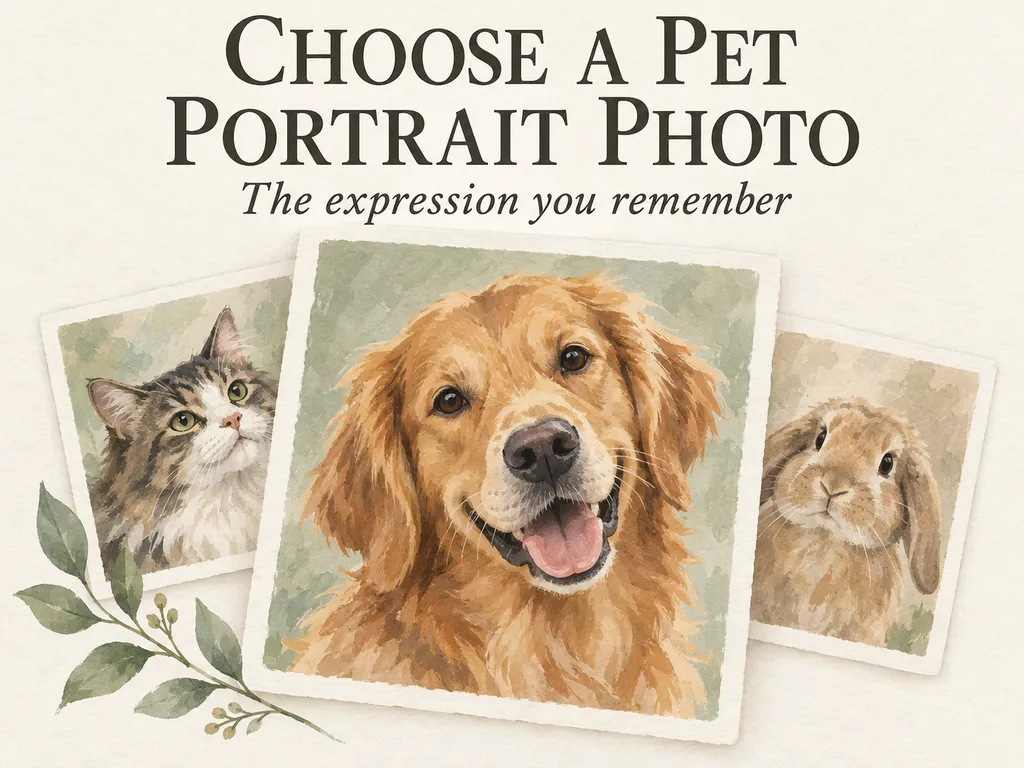
Start with the photograph that looks like the pet you remember. Then check whether it shows the eyes, markings and other details needed for the portrait you want. If you have several pictures, keep both the favorite and the clearest while you compare the requirements of the item or artist.
Only have an older or blurry picture? Keep the original and ask what is possible with that file before trying to improve it. There may be limits, but you do not have to decide those on your own from a small preview.
Decide what you want the portrait to keep
What makes you return to this picture? Write down the detail: the look back at you, a sleeping pose or the chair where they always settled.
"I want to keep this head tilt" gives the provider something specific to assess. If the chair or garden matters too, mention it before choosing a format that includes only the face.
Artist Amy Hilger's reference-photo guidance includes everyday poses and activities, not only a straight-on head portrait. That is a useful reminder to compare the available style with the image you love. It does not mean every service can include every pose or background.
Compare detail before you crop
Open the candidates at a similar viewing size. A bright garden and a sharp sofa cushion can make a picture look clear while the pet's face is still difficult to see.
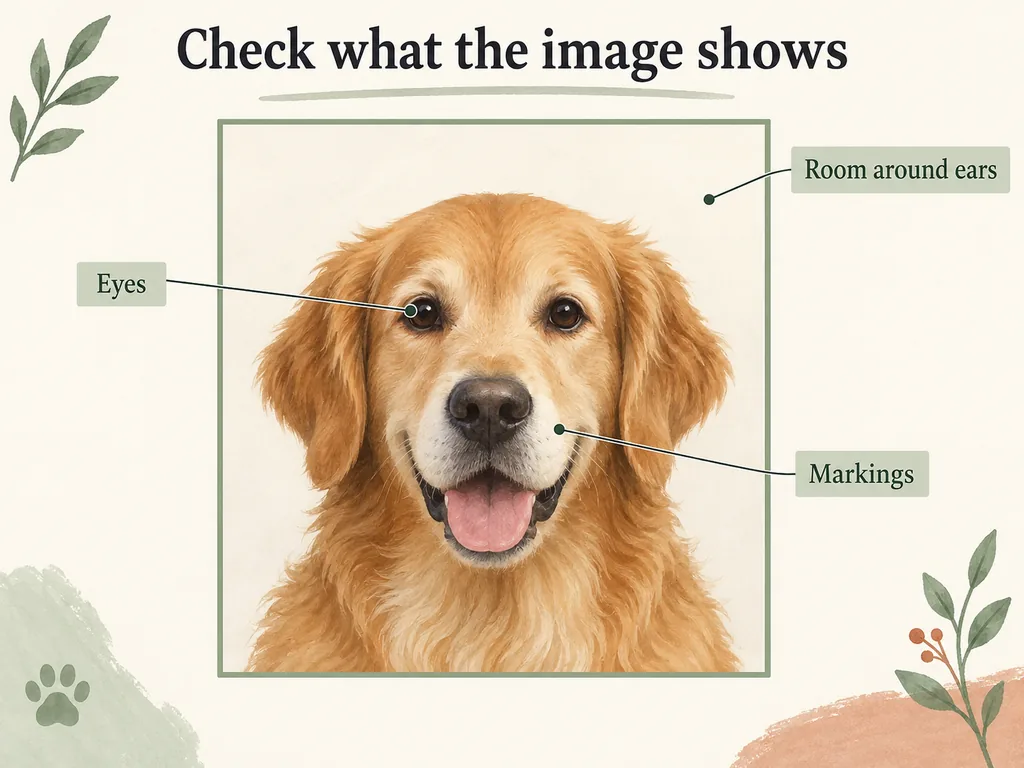
Start with the visible eyes. Nikon's animal-portrait guidance emphasizes eye sharpness. Its camera controls are model-specific; you do not need that camera to use the basic check. In a side profile or a sleeping pose, judge the features that are actually visible rather than treating two open eyes as a requirement.
Then check the details you would notice if they were wrong: an ear shape, the edge of a patch of color, a muzzle marking or a collar you want included. Deep shadow or glare may make those details hard to distinguish even when the background looks clear.
Leave the ears and other wanted features inside the original frame. A crop can remove part of an image; it cannot reveal what was outside it. If one ear is already cut off, keep the photo as a candidate but flag that limitation when asking about suitability.
Give each candidate one job
If several photographs seem useful, note what each contributes. A short record like this can keep the main pose separate from extra detail:
| Candidate | What it shows well | What needs a question |
|---|---|---|
| A: the familiar head tilt | The expression and pose you want | One ear is outside the frame |
| B: a clear daylight picture | The ear shape and coat markings | It is not the pose you want |
| C: your pet on the sofa | The setting you remember | Your pet appears small in the image |
Ask whether the chosen service accepts supporting photographs and how to identify the main reference. If it accepts only one file, do not make a collage or upload an extra set without checking the instructions.
Supporting references and combining several pets are different requests. A service that accepts another picture to check a marking does not necessarily offer a new scene with multiple animals. Keep the request tied to the actual listing.
If you only have an old or blurry photo
First look for the earliest file you can find: the image on an old device, an existing backup or the original held by the person who took it. A screenshot of a social post may not be the only version available. Keep the picture you already have while you look.
If that is the only copy, describe the limitation honestly. Artist Jonny Atkinson discusses assessing older memorial reference photographs and, in his own work, sometimes using other images to clarify details. That is an example of an individual artist's approach, not a promise that Morylane or another provider offers the same reconstruction.
For example, your question could be:
"This is the only photograph I have. I want to keep this expression, but the left ear is unclear. Is there enough information for this item, and which details would remain uncertain?"
Change the feature in the question to match your picture. Ask for an answer about that file and that format. If the result would require guesses you do not want, you can choose another use for the photo.
Keep edits separate from your source image
Keep an untouched copy before trying a crop, color adjustment or background change. When comparing versions, watch for changes to the features you wanted to preserve. An image that looks smoother is not necessarily a more faithful reference.
Hilger also notes that phone portrait-mode blur can obscure useful pet detail. Check the edges of ears, whiskers and fur rather than assuming a blurred background makes the file better for every use.
If you show an edited version to a provider, identify it as edited and retain the original. Do not present newly filled-in details as a record of what the original photograph captured.
Check the actual item before submitting
Before uploading, read the listing's file types, image count and layout requirements. A file accepted for one piece may not suit another; a single pixel count or size limit cannot answer for every portrait, frame and printed keepsake.
Use Morylane's photo submission guidelines for the preparation and permission checklist alongside the current item's instructions. Names and dates need their own spelling check. If you are using another person's image, confirm permission for the intended piece.
For an unclear requirement, contact Morylane with the item name or page address and your question. Ask about any changes you want to the image. Retouching and combining pets need to be offered for the particular piece; a photo suitability check is not a customer design-proof approval stage.
If the picture is not suitable for the format you first considered, it may still belong in an album or beside a written memory. Our pet memorial ideas guide offers other ways to use what you have. For now, choose a candidate and write down the one detail you want to ask about.