Remembrance Ideas
Creating a pet keepsake box: what to save and how to organize it
Gather a few meaningful objects, give photographs their own space, and leave a contents card that explains what you kept.
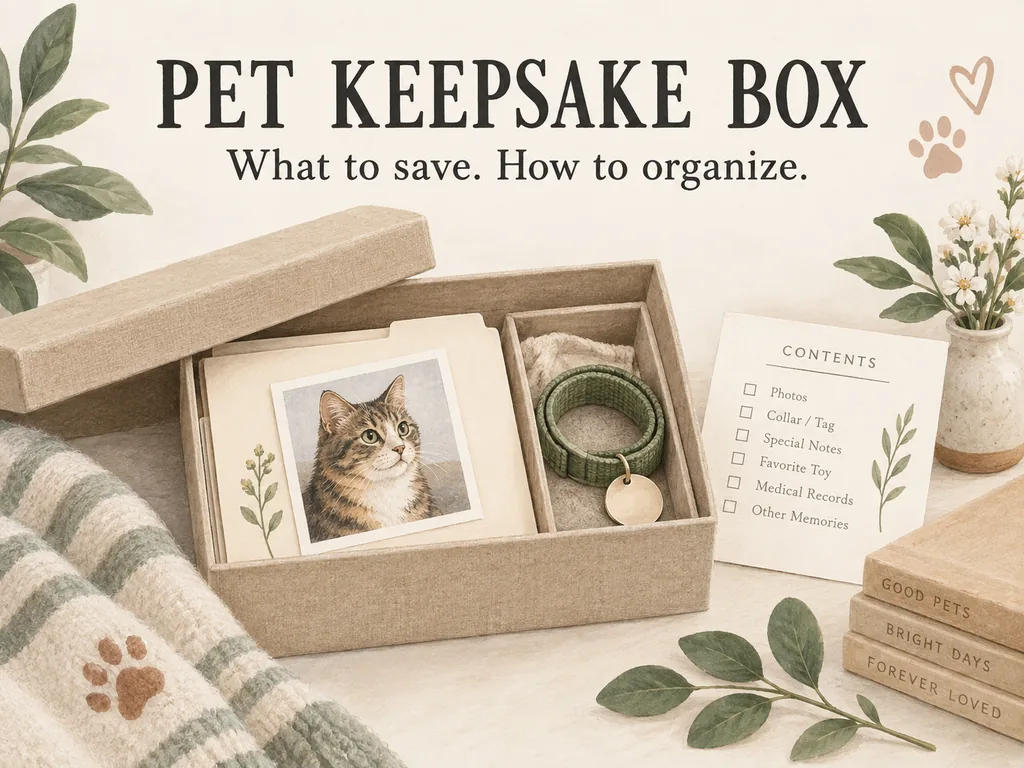
Start a pet keepsake box by laying out the few things you want it to hold. Keep photographs apart from loose objects, then choose a box that fits them without squeezing. A short contents card will help you find the letter or picture later without unpacking the whole collection.
The box can hold everyday memories, an adoption anniversary collection or reminders after a pet's death. This guide covers photographs, notes and personal objects. Ashes need a container documented for that purpose; a decorative keepsake box alone is not enough.
Start with a few objects, not the whole collection
Perhaps you want to keep a few things from your pet's first month at home. Or you have a bag of belongings after a goodbye and know which one you want to put somewhere safe. Begin there; the rest can wait.
A print, an old tag and a card someone gave you may be all you choose. For a bed or large toy, put a picture in the box instead. The object itself can stay where it is while you decide what to do with it.
Leave things your pet still uses in everyday use. If you are collecting memories while your companion is with you, our everyday pet memories guide offers small projects that do not depend on retiring a favorite toy.
Put uncertain choices aside rather than forcing them into the box. Do not include food, damp items or medication. Keep small tags and loose parts out of reach of children and animals.
Separate photographs and paper from loose objects
Photo copies and originals
Decide which prints are copies you can replace and which are the only originals. That distinction matters more than whether the outside of the box is decorative.
The National Archives' family photograph guidance recommends suitable individual enclosures for frequently handled or fragile photos. It also advises keeping original prints and film after digitizing them; digital copies are not replacements for originals.
For a box you will open often, consider including a copy and keeping the original separately in appropriate storage. Record the original's location on your contents card. If an old print is curled, damaged or stuck, seek conservation advice instead of trying to flatten it or remove old tape at home.
Our photo selection guide helps you choose a picture for a new print or keepsake. Its printing considerations are separate from caring for an existing photograph.
Paper and small objects
Give photographs their own enclosure rather than placing a tag or buckle on top. The Library of Congress preservation guide recommends photo-storage materials that pass the Photographic Activity Test, labeling the sleeve rather than the photograph, and avoiding adhesive tape, paper clips and staples on photographs or paper.
Put loose objects in a separate small container so they cannot slide across the photographs when you open the box. For a collar, textile, fur keepsake or clay impression, follow guidance for that particular material or ask its maker about care. Paper-storage advice is not a universal treatment for everything in the box.
Choose a box you can open without rearranging everything
Measure the contents with their folders and small containers in place. When comparing boxes, look for usable interior dimensions: the outside measurements do not tell you whether your folder will fit. Close the lid and check that it presses on neither the objects nor the paper.
Try lifting out the photograph folder while the other objects stay in place. If you have to tip the box or move several items every time, simplify the arrangement. A second small box may be more useful than a single crowded one.
A wooden finish, a fitted lid or the word "keepsake" does not establish preservation quality. Choose storage materials for the contents you actually have. If the originals need more specialized housing, the decorative box can hold copies and a note telling you where the originals are kept.
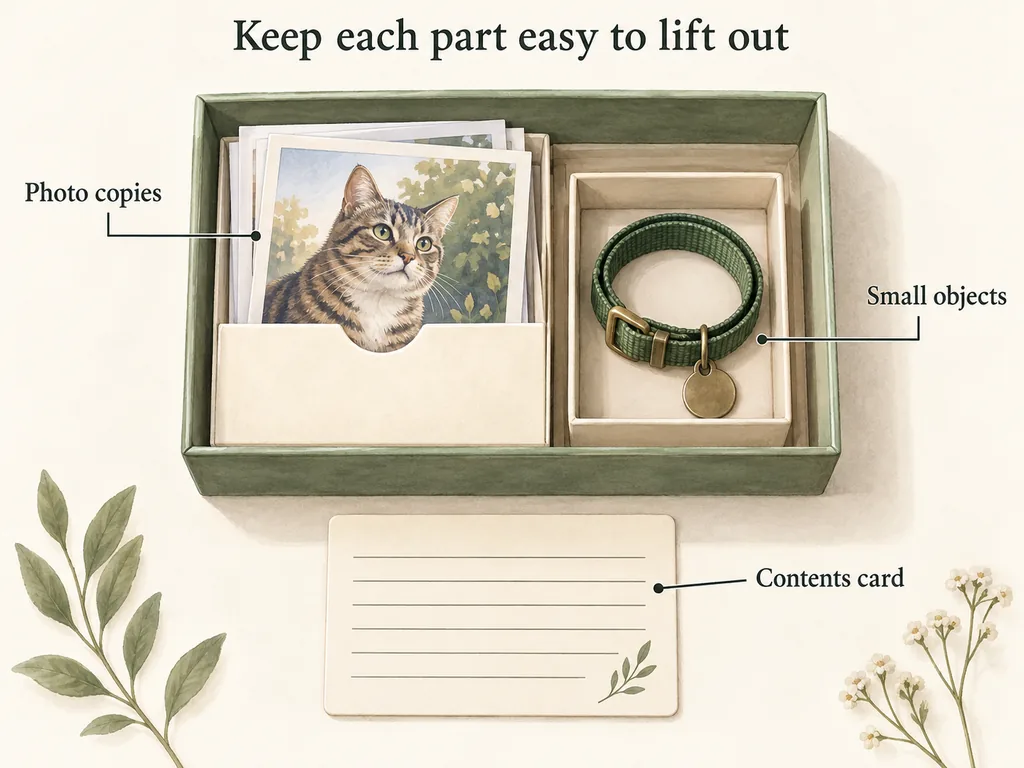
Add a short contents card
A tag may be easy to recognize now. A note about which collar it came from could help you or a family member years later. Keep that note on a contents card near the top of the box, along with the location of anything stored elsewhere.
Here is an example to adapt with your own facts:
- Photo folder: Copies from our first summer together. Original prints are in the family photo box.
- Small container: The green collar from that year, no longer in use.
- Envelope: A note about the morning walk and a card from a friend.
Replace the details and locations; this is not a record of a real pet's collection. If you do not know the year, describe the occasion. A guessed exact date makes the card less useful.
For several pets, put names on the folders or notes so the objects do not become difficult to identify later. If the box contains letters or veterinary paperwork, remember that these may include private information. A contents card can name the document without copying an address or account number onto it.
A first arrangement you can try
Set out a photograph copy, an old tag and a short note. Then try this arrangement:
- Put the photograph in its appropriate enclosure, with the note beside it rather than attached to the image.
- Place the tag in a separate small container. Check that it stays away from the photograph when you lift either part out.
- Add the contents card and close the lid gently. If something catches or presses, change the layout before adding more.
Leave the pieces removable. This is a box to open and rearrange, rather than a shadow box whose contents must stay in place on a wall.
Store it for the contents, not the photograph
A sunny windowsill might make a pleasing picture of the finished box, but that is not a reason to keep it there. Library of Congress guidance favors clean, climate-controlled storage away from light, heat and water sources, and off the floor. Choose a location that suits the actual materials inside.
Keep digital photos and notes backed up somewhere other than a device in the box. The guide also covers maintaining access to files as storage technology changes.
If you notice dampness, sticking photographs or damaged surfaces, do not experiment with cleaning products. Consult material-specific care advice or a conservator. No ordinary box comes with a guaranteed number of preservation years.
Leave room for the box to change
You might add a new note, move an object to a different container or keep the box closed for a while. Someone else's letter can stay private even if you show the rest of the collection. Ask before sharing their words or photographs.
For a different format, our pet memorial ideas guide has other starting points. If you have chosen the box, put the contents card where you can reach it. Check once more that you can lift out the photograph without disturbing the objects beside it.