
Remembrance Ideas
What to say when someone loses a pet
Words for a first message, a conversation or a later check-in, with room for the person to talk, decline an offer or keep things private.

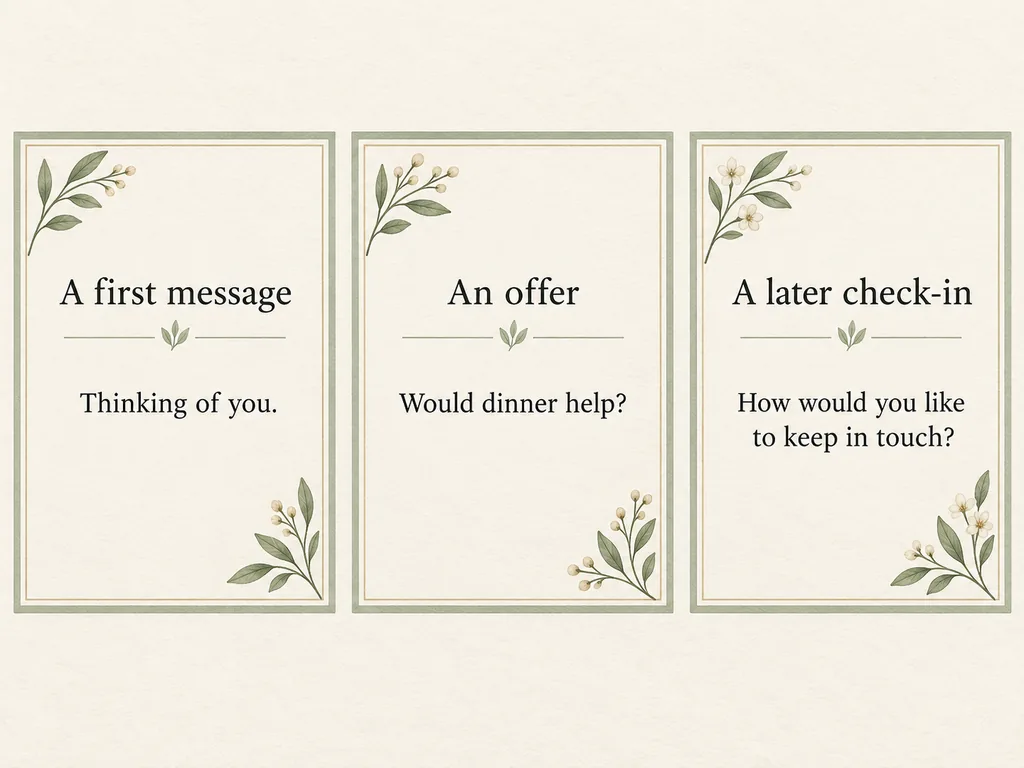
When someone loses a pet, you can start with: "I'm sorry about [pet's name]. I've been thinking of you." Keep the first message short, use the name only if you know it, and let the person decide whether they want a conversation.
The examples below give you somewhere to start. Change them to sound like you, and leave out any memory or offer that is not true.
Start with a short, direct message
If you do not know the pet's name, "I'm very sorry to hear about your pet" is enough. There is no need to guess a nickname or make your message sound more intimate than the relationship is.
You can acknowledge the death without asking what happened. The pet-loss handout hosted by LSU's veterinary hospital advises against questioning the circumstances of the death or trying to fix the bereaved person's feelings. Let them choose what to tell you.
Before sending a public comment, check whether the person has shared the news publicly. A private message to you is not permission to announce their loss to others.
Match the message to your relationship
You might write a close friend differently from a coworker. Here are three possible starting points:
| Your relationship | A message you could adapt |
|---|---|
| A close friend | "I'm sorry about [Name]. I'd like to be there for you, whether you want to talk or just have company." |
| A coworker | "I'm very sorry about your pet. Please don't feel you need to explain anything to me." |
| Someone you do not know well | "I wanted to send my sympathy after hearing about your pet." |
For a text that does not need an answer, you might add: "No need to reply; I just wanted to send you a little care." Only say that if you can leave the message unanswered. Do not follow it with several questions.
If you are writing a card instead, our pet sympathy card messages include complete notes to adapt. You do not have to fit every thought into the first text.
In person, leave room for their answer
After saying you are sorry, pause. You could ask, "Would you like to tell me about [Name], or would you prefer some quiet company?" Accept either answer, including a change of subject.
Ask before offering a hug. If the person begins a story, listen without taking over with your own loss. You can have shared experiences without knowing exactly what this loss feels like for them.
Leave out phrases that shrink the loss, suggest another pet as a replacement, or ask the person to stay positive. Avoid afterlife assurances unless you know those words reflect their beliefs. You can say, "I'm sorry this is so hard," without offering an explanation for the death.
Share a memory you actually have
A small, true detail can belong in your message: "I still remember [Name] bringing that toy to the door when I visited." Replace the example with something that really happened.
If you never met the pet, you might mention a photograph the person showed you. If you do not have that connection either, a simple message of sympathy can stand on its own.
If you have a photograph they might like, ask whether they would like you to send it. Keep the answer separate from permission to post it online. A picture welcomed in a private chat may not belong in a public tribute.
Make one practical offer
Choose something you can do, at a time you can manage. Caring Pathways' guidance on supporting a friend includes practical help such as meals and errands. A specific offer gives the person something concrete to accept or decline.
For example: "I'm going to the grocery store tomorrow afternoon. Would you like me to pick up anything for you?" Or: "I can bring dinner on Friday if that would be useful."
Offer a day you can manage, then wait for an answer before arriving or arranging a delivery. No reply is not agreement. If they decline, "Of course" is enough; they do not owe you a reason.
If you said something that landed badly
If you used a phrase such as "at least" or suggested another pet and the person told you it hurt, acknowledge it plainly. An apology could be: "I'm sorry. That came out as if I was making your loss smaller. I shouldn't have said it."
Skip the long explanation of what you meant. They should not have to reassure you about your intentions or explain their reaction before you can apologize.
An apology may not lead to a longer conversation that day. Leave it there if they do not want to talk.
Check in without asking for progress
Cornell's pet-loss resources emphasize that grief does not follow one prescribed timeline. A later message need not ask whether the person is "better" or whether they have put away the pet's things.
You could write: "I was thinking of you and [Name] today. Would you like a call sometime this week?" Let them choose the time, or decline. If they have asked for space, respect that rather than using a reminder on your calendar as a reason to keep contacting them.
When you are unsure, ask: "Would you like me to check in again, or would you rather reach out when you want to?" Their preference can change.
Only offer a keepsake project if they have said they want one. Our pet memorial ideas can help with that separate decision. Buying or making something is not a requirement for showing care.
When they ask for more support
If the person asks about a pet-loss group or a qualified counselor, offer to look with them. The Cornell page linked above lists resources. Check what the provider offers and its current availability; do not enroll your friend without asking.
Morylane's pet loss and remembrance resources offer wording and creative ideas, not counseling. If your friend wants to talk, you can listen without having an answer ready for everything they say.