Personalized Gift Ideas
Pet cremation jewelry vs. personalized pet jewelry: what to check
Decide whether ashes are involved, then compare the specific piece's capacity, care and personalization requirements before ordering.
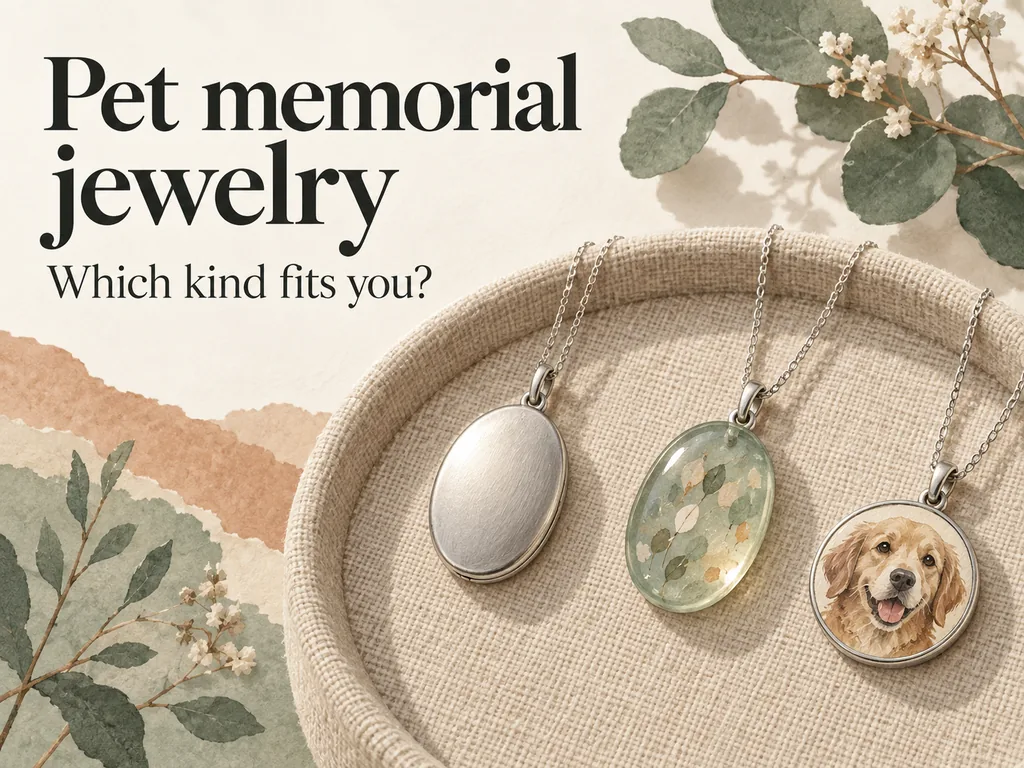
Pet cremation jewelry uses a small portion of a pet's ashes, either in a compartment or incorporated into the piece during making. Personalized pet jewelry can use a name, photo or paw-print design without any ashes. The categories overlap: a cremation pendant may also have a name engraved on it.
The first question is personal: do you want ashes involved at all? You can settle that before choosing a shape or engraving. The word "memorial" in a product title does not tell you what is inside.
Start with what you want the piece to hold
When two similar-looking necklaces have different ordering instructions, this distinction can help:
| Type | What makes it personal | What to confirm |
|---|---|---|
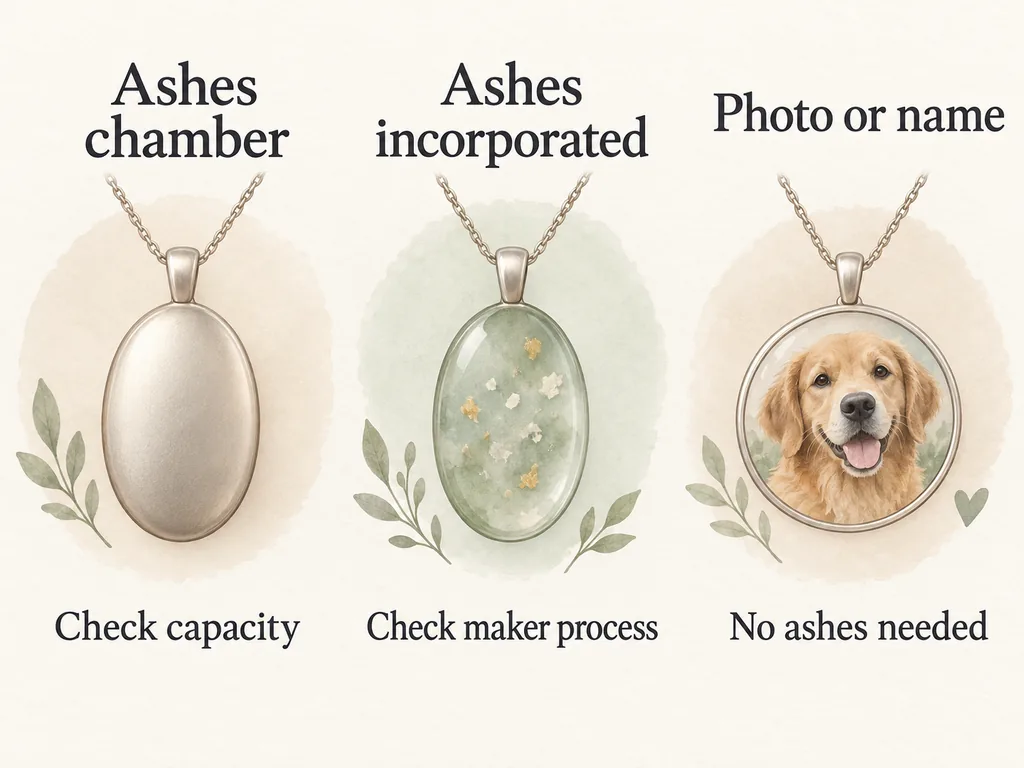
| A piece with an ashes compartment | A small portion kept inside a purpose-made chamber | Documented capacity, closure and the maker's instructions |
| A piece made with ashes | Ashes incorporated into its material during making | Who makes it, what material is needed and how it will be handled |
| A photo, name or paw-print piece without ashes | An image or inscription | What you submit, the available design and the finished size |
For an example of the second type, Spirit Pieces describes many of its designs as ash-infused glass or resin. These differ from its fillable pieces. That is a manufacturer's description of its own range, not evidence that every cremation necklace has the same construction.
A necklace can have a chamber and an engraved name. Another may simply carry the name. A paw motif needs checking too: is it a general design, or will the maker use a print you supply? Read the description before relying on the photograph.
Check the amount and who will handle it
For a chamber piece, ask for the usable capacity of that exact design. Life Cycle Urns describes its memorial jewelry as holding a small symbolic amount. That guidance does not establish another seller's capacity, and the outside size of a pendant does not tell you how much space is inside.
If a maker will incorporate ashes, ask how much they need you to provide and how much goes into the piece. Those figures need not mean the same thing. Find out what happens to unused material before deciding whether the process feels right for you.
You can ask the cremation provider whether they offer assistance for the chosen piece. Do not open existing packaging just to estimate the amount or follow a generic online filling video. Obtain instructions for the actual item first; this guide does not provide a filling or sealing method.
If you need a container for all the returned material, compare urns separately. The pet urn size guide explains why usable volume, packaging and opening size each need checking. A wearable keepsake and a full-size urn have different purposes.
Read the closure and care instructions before buying
A closed pendant is not a waterproof promise
A screw-like detail in a product photograph cannot tell you whether the closure is intended to be reopened or what water exposure the piece can tolerate. Ask for the manufacturer's written instructions, including any restrictions after assembly.
Life Cycle Urns advises against wearing its cremation jewelry in water. Treat that as a reason to check the instructions for your own piece, not as a universal test result. "Stainless steel" or "sealed" alone is not a complete answer about an assembled pendant, its contents and its finish.
If the instructions are unclear, ask before wearing it in the shower or swimming. Do not attempt to improve a seal with an adhesive recommended for a different piece.
Check the whole piece, including the chain
A close-up gives little sense of how a pendant will sit against your clothing. Compare its stated size and chain length with a necklace you already wear comfortably. Check the weight and fastening as well, especially if you find small clasps difficult to use.
Ask what the skin-contact components are made of if material sensitivity matters to you. A broad label such as "skin-friendly" does not identify the metal, plating or other components. Avoid treating it as a personal safety guarantee.
When you receive the piece, keep its care instructions with the order details. That way, when it needs cleaning, you can find the guidance for its finish instead of trying to remember which advice belonged to which necklace.
If you are choosing a gift, ask first
Before shopping for someone else, find out whether they would like a necklace. They may prefer a photo piece. They may not want a keepsake right now. You do not have to guess on their behalf.
You could start with:
"I was thinking of a necklace with [pet's name], but I wanted to ask first. Would you like that, or would you prefer something else?"
If they are interested in a piece involving ashes, let them choose how and when to discuss it. Do not request, move or arrange to send ashes as a surprise. You can offer to help compare designs once they tell you what they want.
Compare two listings with the same questions
Put the two listings side by side and fill in what each actually tells you. A blank space is a question for the seller, not a reason to borrow the answer from the other listing.
| Question | Detail to record |
|---|---|
| Does this item involve ashes? | Chamber, incorporated during making, or neither |
| What is required from me? | Exact photos, text or materials; any separate handling process |
| What capacity or amount applies? | The specific piece's capacity or the maker's requested quantity |
| How will I wear it? | Pendant measurements, chain length, clasp and material information |
| What care is required? | Water, cleaning, storage and closure restrictions |
| What if something needs correcting? | The seller's current policy for the actual order type |
For a chamber pendant, a focused inquiry could be: "Does this exact design have a compartment for ashes, what is its usable capacity, and where can I read the closure and care instructions before ordering?"
For a made-with-ashes piece, replace the capacity question with one about the maker's process and the handling of unused material. Do not assume the answers for one necklace apply to the next.
Choose the type before personalizing it
Morylane's pet cremation jewelry collection is one starting point for pieces intended for ashes. The broader pet memorial necklaces collection includes different kinds of keepsakes, so read the individual listing rather than relying on the category name.
Once the type is settled, check the photo, name and dates. Keep the correct spelling beside you while you enter it. Confirm any paw-print requirements before submitting; choosing the right necklace does not catch a typo for you.
Still undecided? Save the listing and send the seller your unanswered questions before ordering. A photo or name piece remains an option if you would rather leave ashes out of the decision.