Remembrance Ideas
Pet memorial inscription ideas: short wording that fits
Short inscription examples, character counts and a worked line-break example to help you prepare the words for a pet keepsake.
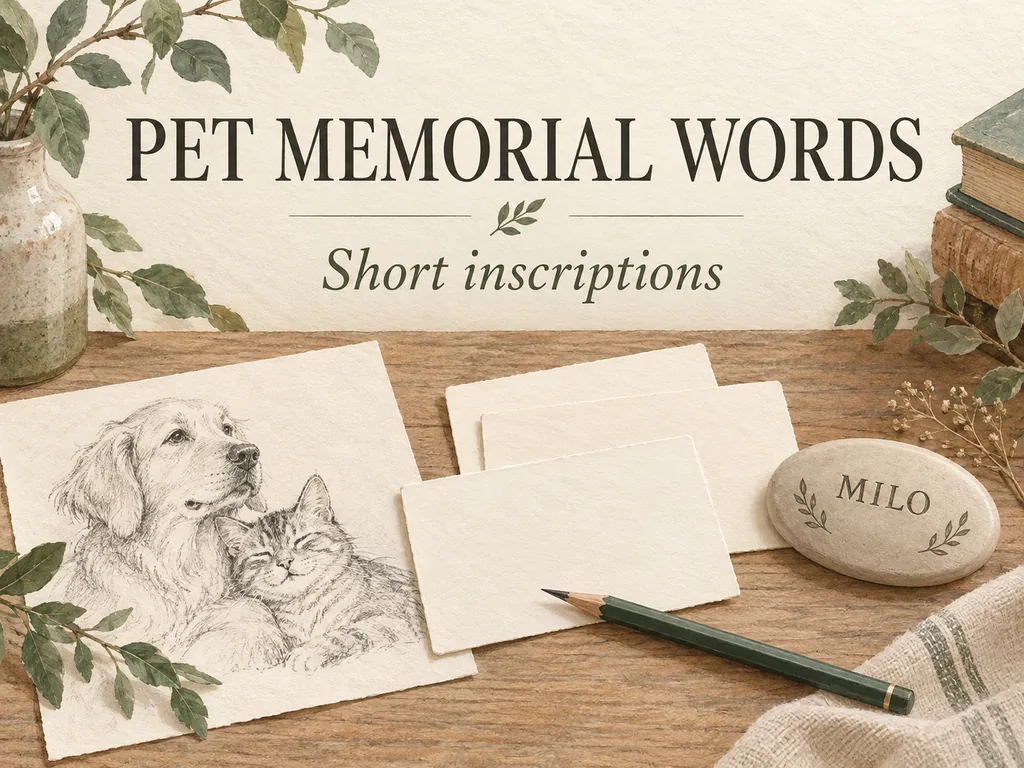
A pet memorial inscription can be just a name, or a name with one short line. Dates are optional. Check the chosen item's character and line limits before settling on the words. Below are eight short examples with character counts, plus a worked example of splitting a sentence across two lines.
There may be a whole story behind the words. You can keep that story without trying to put all of it on a pendant or plaque.
Short inscription ideas to adapt
These examples were written for this guide, not taken from poems or songs. Change them to suit your pet. Each count includes exactly the text shown, with its spaces and punctuation; adding a period or a name adds characters.
| Example wording | Characters | A memory it might suit |
|---|---|---|
| Our porch companion | 19 | Time spent sitting outside together |
| Every lap was yours | 19 | A pet who settled on your lap |
| Your welcome stays with us | 26 | The greeting you remember on coming home |
| For all those muddy walks | 25 | Walks you genuinely shared |
| A small friend, much missed | 27 | A simple remembrance without a specific activity |
| Our breakfast supervisor | 24 | A familiar household joke |
| You made the long days kind | 27 | Company during ordinary days |
| Our walks had your pawprints | 28 | A walking companion |
The character count is a drafting aid, not a promise that a line fits a product. A 19-character phrase may still be too long for a small engraving area. Adding a name or date changes the total.
Turn a memory into one short line
Write down something your pet actually did: where they sat during dinner, perhaps, or how they joined you in the garden. A plain description gives you something to edit.
Suppose your dog joined you on the porch each evening. "You sat with us on the porch after dinner" could become "Our porch companion." You have removed the time of day and the extra words, but kept the place you shared. Save the longer version for a letter or memory book if you want to tell more of the story.
If the result feels too formal, read it as though you were saying it at home. A familiar nickname can belong on a keepsake. Gentle humor can, too, when it fits the pet and the person keeping the item. There is no need to add a joke or a religious sentiment because another memorial uses one.
Names and dates are choices, not a required formula
Which name belongs on the piece?
Use the spelling you want to see every day. That may be a nickname rather than a registered name. Check spaces, apostrophes, accent marks, and capitalization. Do not silently remove an accent to make a form accept the name; ask what the maker can reproduce.
If you are buying a gift, ask the recipient how they want the name written. An old social post is not a final instruction to an engraver.
What if you do not know the birthday?
Leave the birth date out rather than guessing. A name and short line can stand alone. If an adoption date matters to you, identify it as an adoption date rather than presenting it as a birthday.
Years alone take less space than full dates. Even so, include them only when you want them and can verify them. If you use a numeric date, make sure the order of month and day is clear to both you and the maker.
Count characters, then plan the line breaks
Check whether the item limits the whole inscription, each line, or separate fields such as a name and message. Ask whether spaces and punctuation count. The maker Handturned's inscription guide includes spaces and punctuation when discussing character counts for its urn work; another seller's instructions still need checking separately.
The examples here use ordinary English letters, spaces, and a comma. Symbols and emoji may be handled differently by an order form or engraving process. Confirm supported artwork rather than assuming a typed paw emoji will become an engraved paw.
A worked two-line example
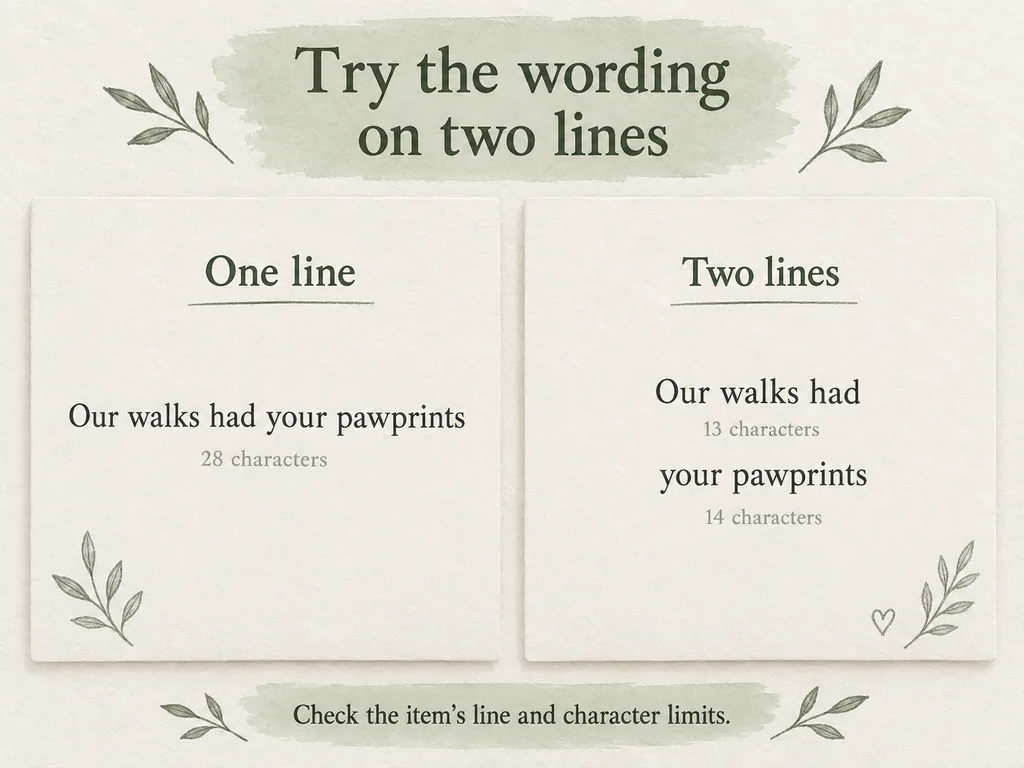
"Our walks had your pawprints" has 28 characters, including the spaces. You could arrange the same words like this:
Our walks had
your pawprints
The first line has 13 characters; the second has 14. The space between "had" and "your" has become a line break. That does not establish a 27-character order total: the seller's form may count the line break separately, and it may have a total limit as well as a per-line limit.
What the character count cannot tell you
A phrase can meet a character limit and still look crowded beside a portrait or around a curve. Furever Memorials explains in its FAQ that adding more wording can make lettering smaller on its memorials. Ask about the actual layout, not just whether the form accepts your text.
When a sentence looks crowded, try removing a few words. Dropping spaces or squeezing the letters together makes it harder to read. Keep a name together on one line where the layout allows it.
Check the wording against the actual item
A necklace back, a stone face, and a photo plaque do not offer the same space. Confirm where the wording goes and whether the chosen design allows custom text at all. A message visible in a product photograph may be fixed artwork rather than an editable field.
For example, Morylane's two-pet portrait necklace with back engraving has a field for names or short wording on the reverse. It does not follow that every sentence in this guide will fit that pendant. Check the current item's instructions and ask about any unclear text or layout requirement before ordering.
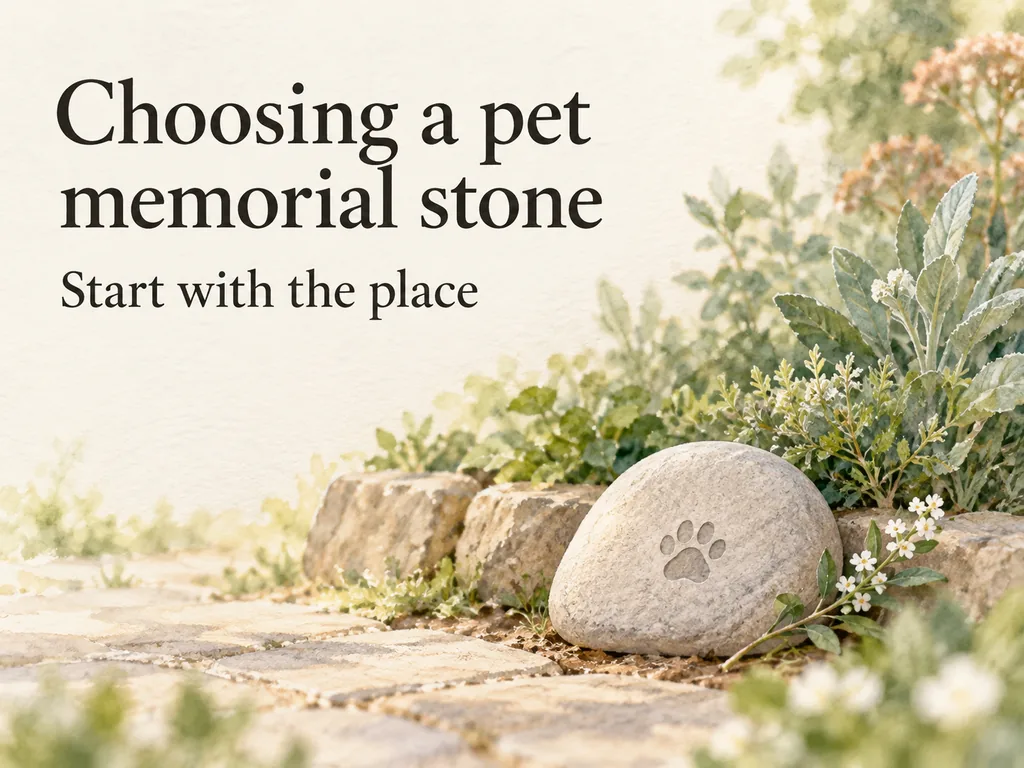
If the inscription will go on a stone, check the stone itself before ordering. Our pet memorial stone guide covers purpose, placement, and material questions. The lettering does not tell you whether the piece suits an outdoor spot or is allowed at a particular location.
Before you submit the text
Read the final version from the order field, not only from your notes:
- Check the name letter by letter against your chosen spelling.
- Check any dates against a record rather than memory.
- Compare each field and line with the stated limits.
- Confirm whether requested line breaks, punctuation, and symbols are supported.
- Remove instructions such as "put the name here" from the inscription itself.
- Save the exact wording you submitted with the order details.
Some sellers send a design proof; others do not. Check the service before ordering, and review a proof if one is supplied. If you notice a mistake after submitting, contact the seller promptly to ask whether it can still be changed. Saving a corrected version in your own notes does not change the order.
For a gift, ask about wording before ordering a permanent message. You can keep a longer personal note in the card. Our guide to what to say when someone loses a pet can help with that separate message.
Common inscription questions
Is just the pet's name enough?
Yes. You can choose a name-only design without adding dates or a phrase. Check that the item supports the layout you want.
Where can a longer tribute go?
Keep it in a letter, journal, or card alongside the keepsake. That lets you keep the full memory without forcing it into a small engraving area.
How should two pets share the space?
Check both names independently and decide whether each needs its own line. If separate dates make the text crowded, consider names only or separate pieces. Do not merge two different life histories into one misleading date range just to save space.