
Personalized Gift Ideas
Wooden vs. ceramic pet urns: what to compare
Compare material, construction and care after checking capacity and closure, with practical questions to ask before choosing a pet urn.
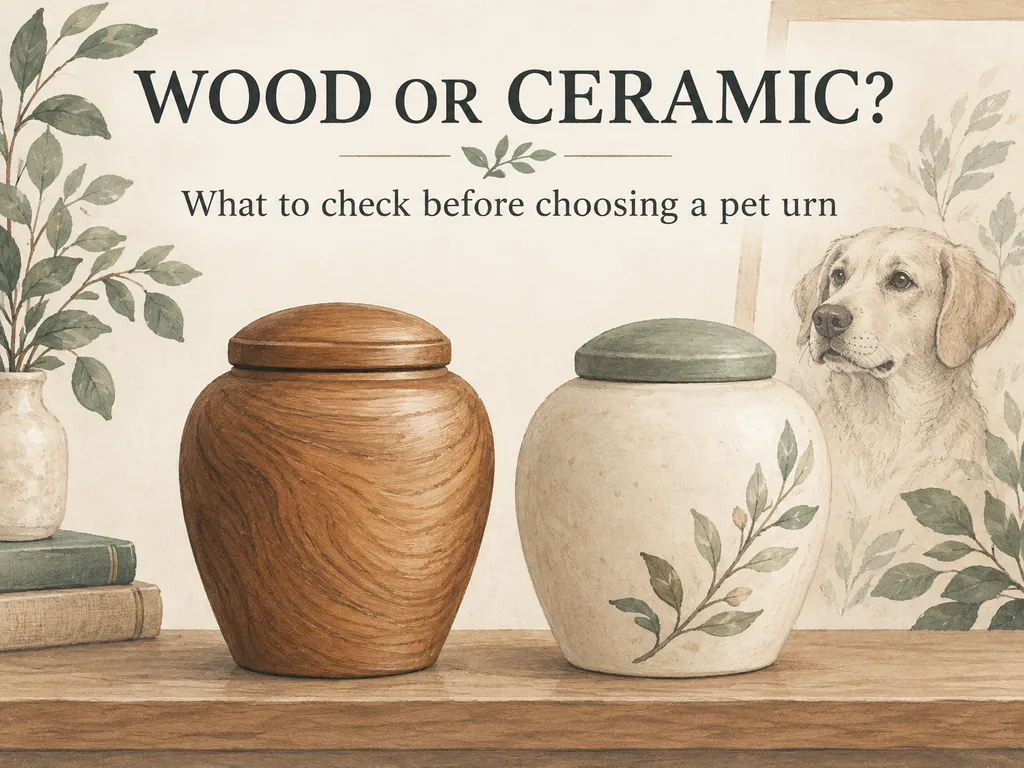
When comparing wooden and ceramic pet urns, confirm the usable capacity, opening, and closure before choosing by appearance. After those checks, consider the place where the urn will sit, how often it will be moved, and the care its finish needs. Neither material is the best choice for every home.
If you already prefer the look of one urn, start there. Check whether it will fit the returned contents and suit its place in your home before ordering.
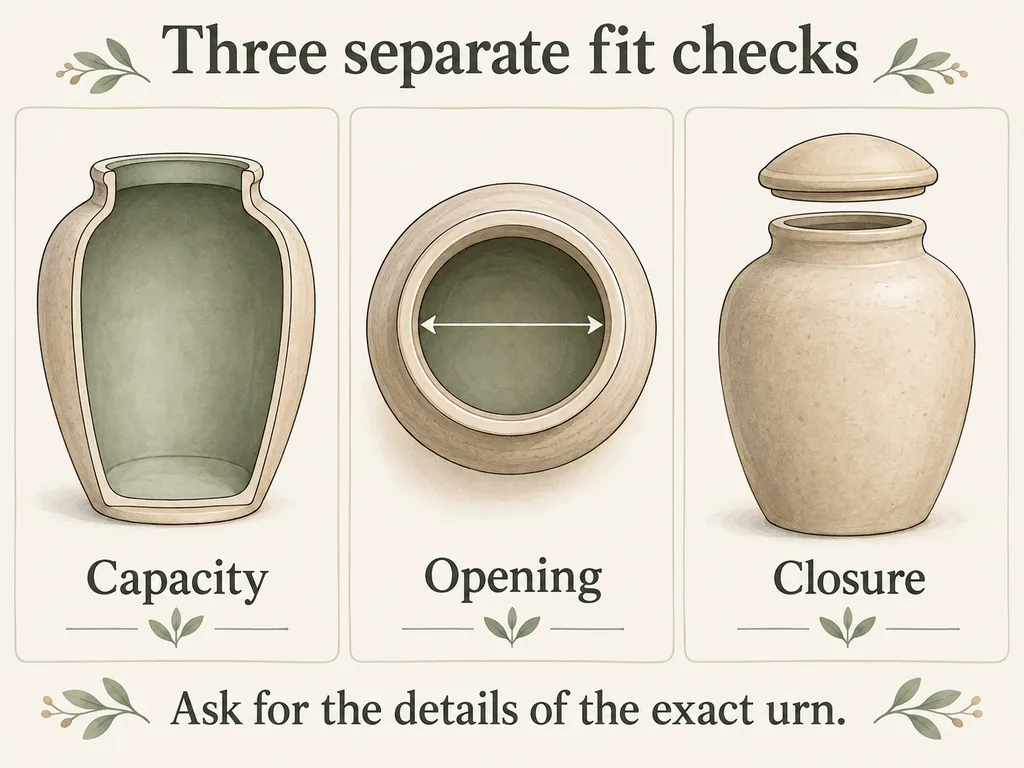
Check fit and closure first
Ask your cremation provider what needs to fit, including any packaging that should remain intact. Compare that information with the urn's documented usable interior volume and its opening. Exterior height and width are not a substitute for capacity, and a pet's weight alone does not guarantee the right fit. Our pet urn size guide explains those separate measurements.
Ask the seller how the exact urn opens and closes. Is access through a lid or another panel? Are tools needed? Is the closure intended to be reopened, or does the maker specify a final sealing step? A lid visible in a photograph does not establish an airtight or waterproof seal.
If the provider's packaging and the proposed opening do not seem compatible, ask for guidance before ordering. Do not open the returned package simply to make it fit a decorative vessel.
What changes when you choose wood or ceramic?
Put the two listings side by side and look for these details.
| What to compare | For a wooden urn | For a ceramic urn |
|---|---|---|
| Material description | Ask what the body is made of, not just what the surface looks like | Confirm the stated ceramic material and any separate lid or base components |
| Placement | Ask about the wood and finish's care requirements | Plan a position protected from knocks and falls |
| Closure | Confirm the actual lid or access-panel design | Confirm how the lid or other opening is secured |
| Personalization | Check the available engraving, plaque, or photo options for that item | Check how the portrait or wording is applied and cared for |
| Cleaning | Follow advice for that finish | Follow advice for the surface and decoration |
Wood: ask what is under the finish
A wood-look finish is an appearance description. It does not confirm solid wood or tell you the construction underneath. For example, Morylane's house-design dog photo urn is described as having a wood-look finish. Read that wording as stated rather than treating it as a solid-wood claim.
For an urn documented as wood, its location matters. The Canadian Conservation Institute's guidance on wooden objects explains that wood expands and contracts as humidity changes. It also cautions about direct sunlight, nearby heat sources, and products that can affect finishes. That helps explain the care questions to ask; it cannot tell you how many years a particular urn will last.
Ask the maker for care instructions for the exact surface. Do not apply oil, wax, or furniture polish just because the object looks wooden.
Ceramic: plan for careful handling
Ceramic can chip or break if it is struck or dropped. The Canadian Conservation Institute's ceramic-care guidance emphasizes supporting the object and watching for loose parts such as lids. Support the body and base when moving an urn; do not carry it by a lid, handle, or attached decoration.
A ceramic finish may offer the color or portrait style you want. Morylane's personalized white ceramic pet photo urn is one photo-based layout to consider. Confirm the opening, closure instructions, and photo requirements for the actual piece before ordering. Its material or pictured lid alone does not settle those questions.
Think about where it will sit
Picture an ordinary day around the place you have chosen. Will someone reach past the urn for a book? Does the cat jump onto that shelf? Check that the entire base fits on a stable surface, away from the edge, with room around it.
For wood, avoid direct sun and nearby heating sources. For either material, follow the maker's placement instructions and keep the urn away from situations where it could be spilled on or knocked over. A glossy finish should not be read as permission to keep an urn outdoors.
If you expect to move house, ask how to pack the urn and keep suitable packaging. Include the lid, photo insert, or plaque in that plan. A shape that looks simple on a shelf may have several separate parts to protect in a move.
Ask about personalization and delivery
Check the pet's name and any dates before ordering. Leave uncertain dates out. For a photo, use an image you own or have permission to reproduce, and follow the specific item's file requirements.
Ask what the personalization actually involves and what cleaning guidance applies afterward. A printed portrait, a separate insert, and an engraved plaque need not have the same care instructions. Do not assume there is a customer design-proof stage unless that service is explicitly offered.
For delivery, check the production estimate as well as shipping time. Ask how the piece is protected in transit and what to do if it arrives damaged. Keep the order details and packaging while you follow the seller's inspection and reporting process. A delivery estimate is not a guarantee for a particular remembrance date.
A short message to send the seller
You can adapt this inquiry to the urn you are considering:
I am comparing this urn with another material. Could you confirm its body material, usable internal capacity, opening dimensions, and how it closes? My cremation provider will advise what packaging needs to remain intact. I would also like the care instructions for the finish and personalization, plus the delivery and damage-reporting details.
Save the reply beside the product name or model. If you still do not know whether the returned package will fit or how the urn closes, wait for those answers before ordering.
Two questions that often come up
Does wood last longer than ceramic?
You cannot tell from the material name alone. Compare the products' construction and care instructions, and think about the handling they will get in your home. A promise that a whole material category "lasts forever" is not a useful way to choose.
Can either type stay outdoors?
Only consider outdoor use when the maker explicitly supports that use for the exact urn and explains the conditions. Do not infer weather resistance from wood, ceramic, glaze, or a decorative garden photograph. This comparison is for choosing an urn for indoor keeping, not for burial or outdoor installation.